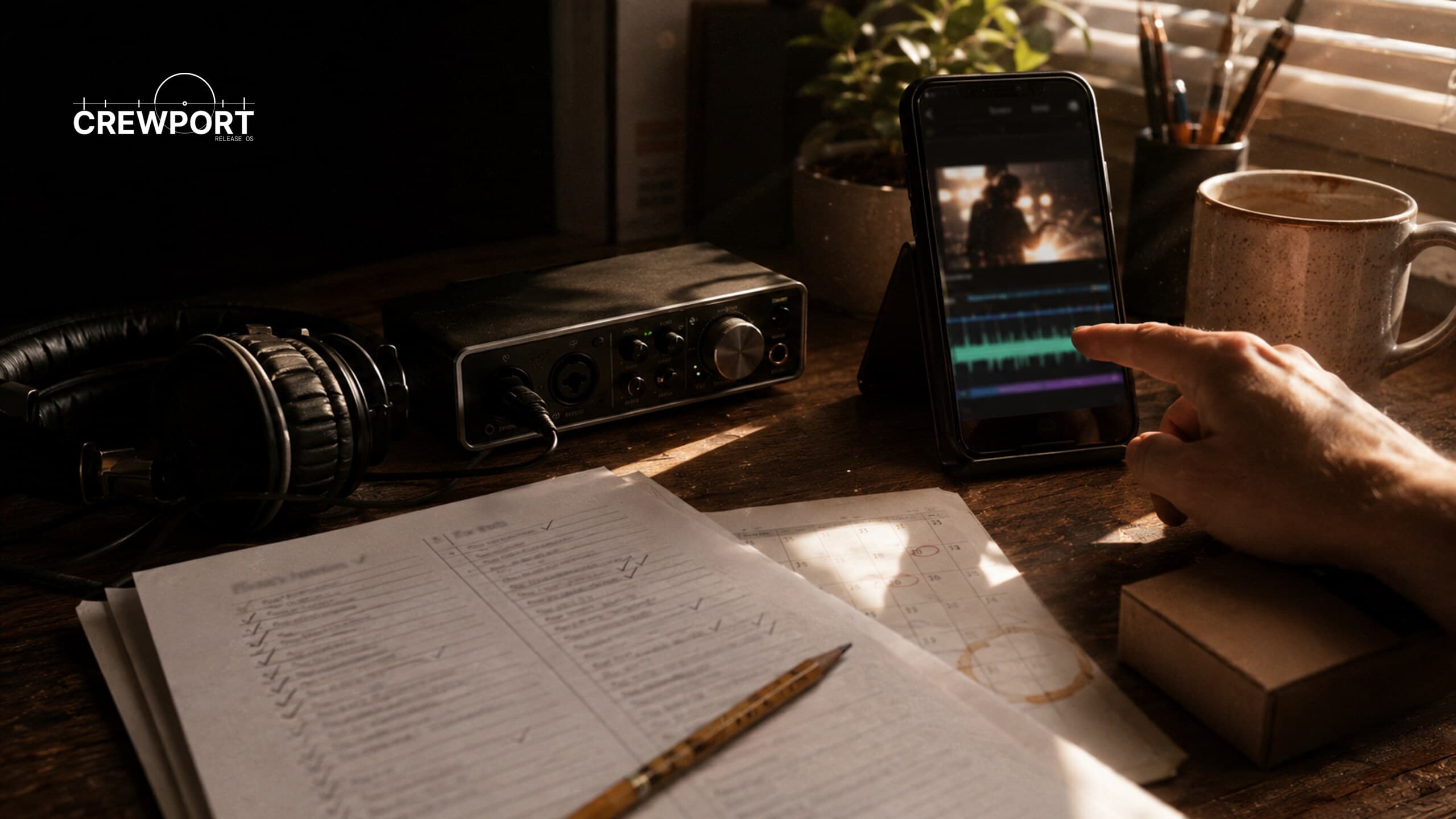
A social media manager opens Instagram, finds a familiar song, and drops it under a 20-second product video.
The track is sitting right there inside the app. The video publishes without a warning. No copyright claim arrives.
Everything appears to be working — and that sequence creates a dangerously convincing illusion of permission.
On August 21, 2026, Sony Music Entertainment sued Kroger and 18 related companies, alleging at least 392 unauthorized uses of Sony-controlled recordings across corporate social accounts and content produced by paid influencers. The complaint names recordings including Mariah Carey's "All I Want for Christmas Is You," OutKast's "Hey Ya!," Bill Withers' "Lovely Day" and Harry Styles' "Golden." Sony is seeking damages and an injunction, and Kroger had not publicly responded when the case was reported on August 24.
To be clear: those are claims in a newly filed lawsuit, not findings by a court.
The pattern around them is harder to dismiss. Sony has previously settled disputes over music in promotional social posts with Marriott and the University of Southern California, and on August 17 Sony and Designer Shoe Warehouse told a court they'd reached a settlement in principle in another case involving alleged unlicensed music use.
Brands are being pushed to confront a distinction that social teams — and plenty of musicians — routinely miss:
A platform can have permission to offer a song to certain users without granting every user permission to put that song in an advertisement.
The music picker is not a licence search
When a song appears in Instagram's or TikTok's general music library, the platform has usually signed licensing agreements permitting particular uses under specified conditions. Those conditions can depend on account type, country, whether the content is personal or commercial, whether money is being spent to promote it, whether a brand or product features, the type and duration of the video, the particular catalogue, and whether the content stays inside the platform.
You never see those underlying agreements. So an accessible audio button can't be treated as proof that your campaign falls inside them.
TikTok's own guidance is unusually blunt: businesses cannot use its general music library for commercial purposes. They should use the platform's Commercial Music Library for commercial activity — including organic business posts, advertising and branded content — and if a business uses another sound, TikTok tells it to obtain the appropriate licence separately.
Instagram draws the same line at the moment a Reel becomes an ad. Its current guidance says a Reel containing licensed music can't be boosted, and recommends royalty-free music from Meta's Sound Collection or original audio instead.
Sometimes the platform simply blocks the promotion. That's the convenient outcome. The expensive one is when the campaign runs successfully for months before a rightsholder notices.
A song usually contains two separate rights
Commercial use of an existing recording generally means dealing with two copyrights:
- the musical composition — melody, lyrics, the underlying song;
- the sound recording — that specific recorded performance, the master.
The distinction holds even when one company appears to represent both. Permission to synchronize the composition with video doesn't automatically authorize a famous recording of it; getting the master from a label doesn't necessarily clear the song its writers and publishers control.
For a conventional ad campaign built on an existing commercial track, you typically need a synchronization licence for the composition and a master-use licence for the recording. Terminology and legal requirements vary between countries, but the two-right structure is widely recognised — the U.S. Copyright Office is clear that a sound recording and the composition embodied in it are separate works.
Which is why buying the track, subscribing to a streaming service or crediting the artist solves nothing. None of those grants advertising rights.
"Organic" can still be commercial
Teams tend to use organic to mean "no media spend behind it." Music licensing looks at more than the budget line.
A video can be commercial when it promotes a company or product, carries an affiliate link or discount code, was commissioned by a brand, forms part of a paid influencer partnership, points viewers toward a sale, or supports a launch or sponsored event. TikTok explicitly includes organic business content among the commercial uses for which it directs businesses to the Commercial Music Library.
Sony's Kroger complaint makes the point concretely. One cited TikTok video allegedly promoted Home Chef, carried an advertising disclosure and included a $100 discount code. Appearing in a social feed rather than a television break didn't stop Sony treating it as advertising.
Small businesses, independent labels and artists selling merch face exactly the same classification question, just with lower financial exposure. A post doesn't become personal because nobody pressed "Boost."
Boosting an old post changes the question
You publish a Reel with music available to your account, it performs well, and two weeks later you decide to turn it into an ad. That second action matters — Meta says Reels containing licensed music aren't eligible for boosting, and recommends replacing the audio with royalty-free or original sound.
The trap is operational rather than legal. Teams create content first and ask about promotion only once something works. By then the approved edit may depend on the song's rhythm, the artist may have reposted it across several accounts, an influencer may have published their own version, and the paid campaign may be scheduled to start that afternoon.
Check the rights when the video is planned, not when the ads account rejects it. And if there's any chance an organic post becomes paid media later, prepare the alternate audio version up front.
Influencers don't carry the risk away
Hiring a creator doesn't automatically transfer responsibility for music selection. The creator picks a track from a personal account and assumes the platform cleared it. The brand approves the final video without asking where the audio came from. An agency converts the post into a partnership ad. Several parties have touched the decision and nobody owns it.
Sony's complaint includes music allegedly used on accounts belonging to paid influencers, and argues Kroger's marketing operation reviewed and approved advertising creative — though no court has decided whether Kroger is legally responsible for those particular uses.
A workable influencer agreement should state who selects and clears music; which approved libraries or tracks may be used; whether the content may become a paid or partnership ad; which platforms and territories are covered; whether the brand may edit, repost or extend the campaign; who retains the licensing evidence; and what happens if a claim arrives.
A broad promise that the creator's content "does not infringe any rights" is useful contract language and a poor production workflow. Give creators an approved music list before they edit.
Using your own song isn't always simple
An independent artist might reasonably ask: can I use my own release in an ad for my tour, merch or album?
Often yes — but first establish what "my own" actually means. You may perform the recording while a label owns or exclusively licenses the master; several writers share the composition; a publisher controls sync approvals; a producer holds approval or participation rights; a featured artist has contractual approval over advertising; a sample was cleared only for distribution of the song; or the platform received the track through a distributor without receiving commercial advertising rights on your behalf.
That last one catches people. A distributor delivering your recording to Instagram or TikTok doesn't ordinarily grant you new rights against co-owners, publishers or sampled works.
Before using the track commercially, confirm:
- Who controls the master?
- Who controls the composition?
- Are there co-writers or publishers?
- Does the recording contain a sample?
- Do the label, producer or featured-artist agreements restrict advertising?
- Is approval required for your name, image or performance?
- Does the intended use cover every country in the campaign?
Artists preparing releases through CREWPORT should submit accurate songwriter, producer and performer information. That metadata helps identify who contributed — it doesn't replace the agreements or permissions an advertising use requires.
A licence has an expiration date
The most instructive allegation in the Kroger case concerns a use Sony says was originally licensed.
According to the complaint, Kroger obtained a seven-week licence for The Lovin' Spoonful's "Do You Believe in Magic" for a 2020 holiday campaign, reportedly running November 13 through December 31 and covering television, radio, internet and social media. Sony alleges versions of the campaign stayed publicly accessible on several Kroger-related accounts after the licence expired — with one Ralphs video allegedly still available on August 17, 2026.
Untested in court, yes. Entirely plausible as an administrative failure, also yes. Social posts stay online until somebody removes them, and a six-week campaign can quietly become a six-year use.
So convert every commercial music licence into an operating instruction listing permitted accounts, platforms, countries, media formats, campaign start, campaign end, paid and organic permissions, influencer and affiliate rights, editing and cut-down rights, and archival obligations after expiry.
Then put the removal date in the campaign calendar before you publish.
Four safer ways to source music
1. Use the platform's commercial library. TikTok's Commercial Music Library contains music pre-cleared for specified commercial uses, and its interface asks you to select the campaign region because availability differs geographically. Efficient — but the terms still matter. A platform licence may not let you download that edit and reuse it on another service, television, a website or an in-store display.
2. Commission original music. A custom recording gives the campaign its own identity and cleaner rights — if the contract actually covers them. Define ownership or licence scope for both composition and master, plus territory, duration, media, edits, paid advertising, creator posts and reuse. Paying a producer's invoice without written rights language just moves the same question into a different folder.
3. Get direct licences for an existing song. Contact the master owner and the composition's publisher or administrator, and describe the real campaign rather than asking for an abstract price. Identify the recording and version, product or brand, video concept, platforms, paid and organic use, influencers, territories, duration, expected launch date, edit length and budget. A recognizable song may be unavailable, too expensive or subject to artist approval — find that out before you cut the video around it.
4. Use a production-music or one-stop catalogue. Some can clear composition and master through one provider, often faster and cheaper than licensing a major release. But "one-stop" should describe actual authority, not convenient marketing. Verify platform, territory, term and advertising restrictions in writing.
Build a clearance checkpoint
Before any commercial social video goes live, write down:
- Who is promoting what?
- Is the post commercial, sponsored or likely to be boosted?
- Where did the music come from?
- Is it from the correct commercial library?
- Which territories and platforms are covered?
- Are both the composition and master cleared?
- Does the permission include influencers and partnership ads?
- When does the permission end?
- Who retains the agreement and payment record?
- Who removes or replaces the content when the campaign expires?
This fits on one page. The person approving the video should see that page — not just the finished edit.
Social media made publishing easier, not permission broader
The Sony–Kroger lawsuit may settle, go to judgment or narrow considerably, and its allegations shouldn't be treated as established fact. But the run of cases involving Marriott, USC, DSW, Chili's and now Kroger sends a clear commercial signal: rightsholders are examining branded social content systematically, including old posts and influencer accounts.
The casual workflow — find a trending song, attach it, publish — was built for speed. Advertising rights were never that simple.
If a campaign earns attention because of the music, somebody should be able to explain why the campaign was allowed to use it. Preferably before the legal notice arrives.
FAQ
Can my business use songs from the TikTok or Instagram music library?
Generally not for commercial content. TikTok says businesses can't use its general library for commercial purposes and directs them to the Commercial Music Library — including for organic business posts. Instagram says Reels with licensed music can't be boosted.
Is an organic post safe if I didn't spend money on it?
Not necessarily. Content can be commercial if it promotes a product, carries a discount code or affiliate link, was commissioned by a brand, or is part of a paid partnership. TikTok explicitly counts organic business content as commercial.
What licences does an ad using a real song need?
Usually two: a synchronization licence for the composition and a master-use licence for the recording. Clearing one doesn't clear the other, and buying the track or crediting the artist grants no advertising rights.
Can I use my own song in my own ad?
Often, but check first. A label may control the master, co-writers and publishers may control the composition, a producer or featured artist may hold approval rights, and any sample may be cleared only for distribution — not advertising. A distributor delivering your track doesn't grant you rights against co-owners.
Our campaign ended — do we have to take the videos down?
If the licence had an end date, yes. Sony alleges Kroger left a campaign online years after a seven-week licence expired. Social posts stay up until someone removes them, so put the removal date in the campaign calendar before you publish.
Does hiring an influencer transfer the music risk?
Not automatically. Put music selection, approved libraries, paid-usage rights, territories and evidence retention in the agreement — and give creators an approved track list before they edit.
Make your catalogue easy to clear
The artists who win brand deals are the ones who can answer who owns what in an afternoon. That starts with clean, complete contributor data on every release.
CREWPORT validates your metadata before delivery and keeps your ISRCs, credits and songwriter, producer and performer information attached to each recording — so when a brand asks, you're not reconstructing your own catalogue from memory. Clearances remain yours to grant; identification shouldn't be the bottleneck.
This article is general information, not legal advice. The Kroger allegations are unproven and no court has ruled on them. Licensing requirements vary by country, and platform music libraries carry territory-specific terms — confirm current platform rules and get qualified legal advice before running a campaign.
Sources
- Music Business Worldwide — Sony Music Sues Kroger Over 392 Alleged Uses, August 24, 2026
- Music Business Worldwide — DSW and Sony Reach a Settlement in Principle, August 24, 2026
- Reuters — Sony Music and USC Settle Social-Media Music Case, March 26, 2026
- TikTok for Business — Commercial Music Library Rules
- TikTok for Business — Using the Commercial Music Library, updated July 2026
- Instagram — Requirements for Boosting a Reel
- U.S. Copyright Office — Musical Compositions and Sound Recordings