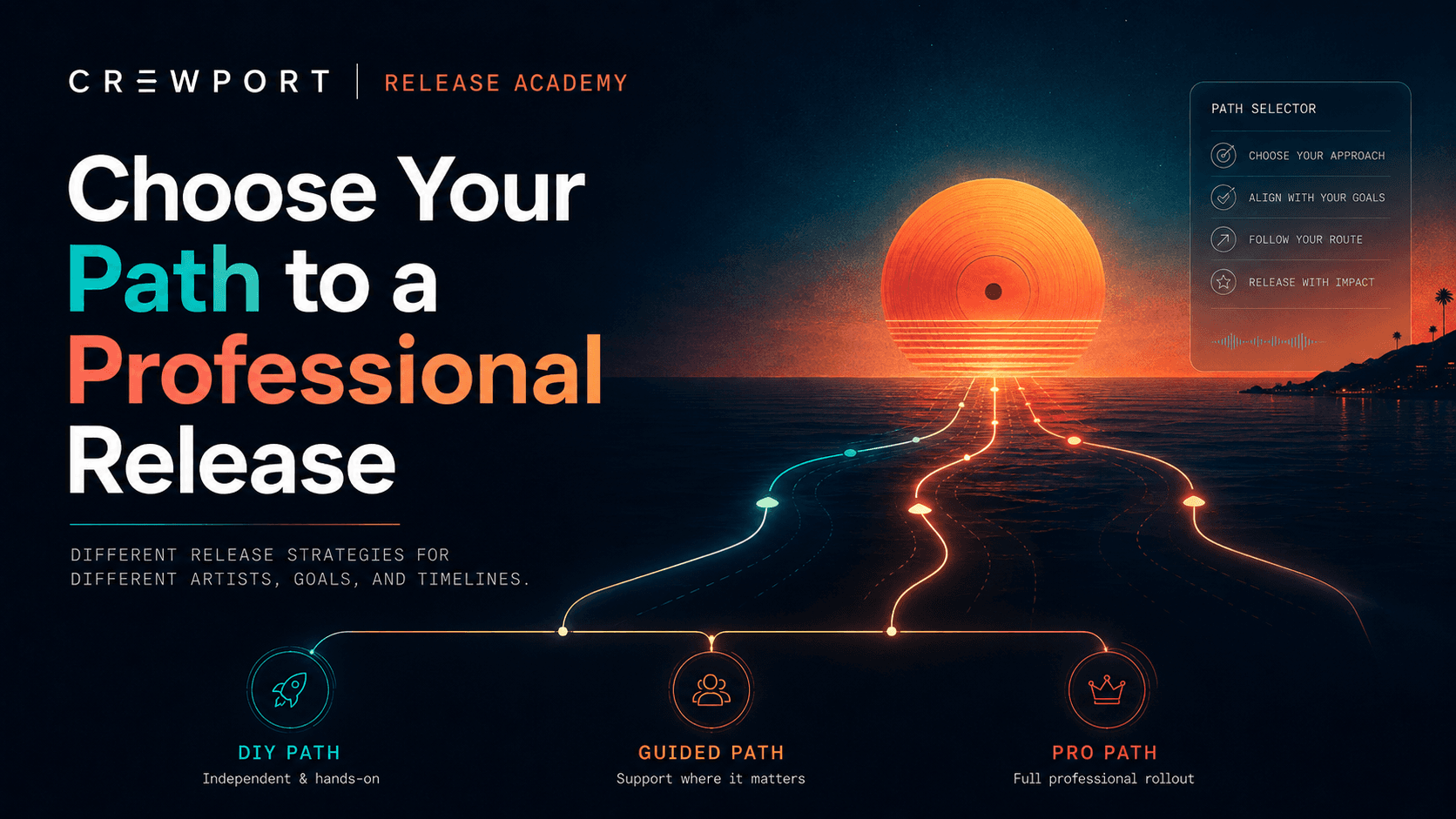
Not every artist comes to distribution from the same place. Some are releasing for the first
time and don't know where to start. Some have an upcoming release and need to make sure
nothing goes wrong. Some run a small label and manage multiple artists at once. Some are
tired of their current distributor and need to move.
The process is different depending on where you are. Start here.
Are you releasing your first song?
If this is your first release, the most important thing is to slow down. The biggest mistakes
in music distribution happen when artists rush — wrong metadata, missing credits, no
timeline, no promotion plan.
Before you do anything else, read these:
- How to Release Music Professionally
- Music Metadata Guide for Independent Artists
- What Is an ISRC Code and Why Do You Need It?
Then come back and work through the release checklist step by step. One release done right
builds the foundation for every release after it.
Your first priority: understand what metadata is and get it right before you upload
anything. Errors at this stage are the most common reason first releases get delayed or
rejected.
Do you have an upcoming release?
If you already have a track ready and a release date in mind, the clock is already running.
Check where you are against this timeline:
- 8 weeks or more: You're in good shape. Submit to distribution, lock metadata,
set up your pre-save, and pitch Spotify editorial before the window closes. - 4–7 weeks: Tight but manageable. Prioritize distribution submission and editorial
pitching immediately. Start pre-save setup in parallel. - Less than 4 weeks: The Spotify editorial window is closed. Focus on pre-save,
content rollout, and direct playlist pitching after release.
Read the full timeline breakdown here:
How to Release Music Professionally
Your first priority: confirm your metadata is complete and correct, then submit to
distribution today. Every day you wait is a day closer to missing key promotion windows.
Are you running a small label?
If you're releasing music on behalf of artists — even informally — the process is more
complex than a single-artist release. You're managing multiple sets of metadata, multiple
rights holders, multiple release timelines, and potentially multiple royalty splits.
The most common problems at the label level:
- Inconsistent artist name formats across releases
- Missing or incorrect songwriter and producer credits
- No intake process for collecting assets from artists before submission
- No release calendar, which means everything becomes urgent at the last minute
Start with these:
- Music Distribution for Small Labels
- How to Collect Release Assets from Artists
- How to Build a Release Calendar for a Label
Your first priority: build an intake process. Before a release enters your workflow,
you need a standard form that collects every asset and every piece of metadata from the
artist in one go. CrewPort is built to support exactly this kind of structured label workflow.
Are you switching from another distributor?
If you're moving an existing catalog to a new distributor, there are a few things to get right
before you start.
The most important: do not delete your existing releases until your new distribution
is confirmed live. A gap in availability — even a few days — can affect your streaming
history, playlist placements, and algorithmic momentum.
What to do before you switch:
- Export your ISRC codes from your current distributor. These belong to the recordings,
not to the distributor, and you'll need them to maintain continuity across platforms. - Check for any exclusive distribution agreements or lock-in periods in your current
contract before initiating a transfer. - Plan the transition so the new release goes live before the old one is taken down,
not after.
Read more: How to Move Your Music to a New Distributor
Your first priority: gather your ISRC codes and read your current distributor agreement
before you do anything else. A transfer done wrong can cost you streaming history that
took years to build.
Not sure where you fit?
Answer these questions:
- Do you have a finished master and cover art ready to upload? If not — start with
What to Do Before You Submit Your Song to DSPs. - Do you know your release date? If not — start with
How Early Should You Upload Your Release? - Do you understand what metadata is and what yours should say? If not — start with
Music Metadata Guide for Independent Artists.
Common mistakes at the starting line
- Uploading before metadata is finalized
- Not knowing your ISRC codes or assuming the distributor handles everything
- Setting a release date without checking the editorial pitch deadline
- Skipping the pre-save setup because the release feels too small to bother
- Switching distributors without exporting ISRC codes first
CrewPort workflow tip
Whichever path applies to you, the single most common point of failure is the same:
metadata submitted with errors that could have been caught before upload. CrewPort runs
a metadata check before your release is submitted to any platform — so problems surface
in your dashboard, not in a rejection email three days before your release date.
FAQ
Can I release music without a distributor?
Not on major streaming platforms. Spotify, Apple Music, and other DSPs don't accept
direct uploads from artists. You need a distributor or aggregator to deliver your release.
What's the difference between an artist release and a label release?
Functionally, the process is similar. The difference is in rights management, royalty splits,
and the volume of releases. Labels need intake processes and release calendars that a
single artist typically doesn't.
Can I use the same ISRC code if I re-release a track?
No. A new release — even of the same recording — requires a new ISRC if it has been
remastered, re-edited, or is being distributed under different terms. If it's identical,
the original ISRC should be reused.
What happens to my streams if I switch distributors?
Your streaming history stays on the platform tied to the recording. If the ISRC is
maintained correctly during the transfer, historical data should remain intact.
How do I know which distributor is right for me?
Read: How to Choose a Music Distributor Without Getting Trapped
Is CrewPort suitable for first-time artists?
Yes. CrewPort is built around guided workflows that catch common mistakes before
submission — which makes it particularly useful if you're releasing for the first time
and don't yet know what you don't know.
Last updated: May 2026
Ready to start your release the right way? CrewPort walks you through every step —
from metadata to delivery to promotion.
Apply for Early Access →